
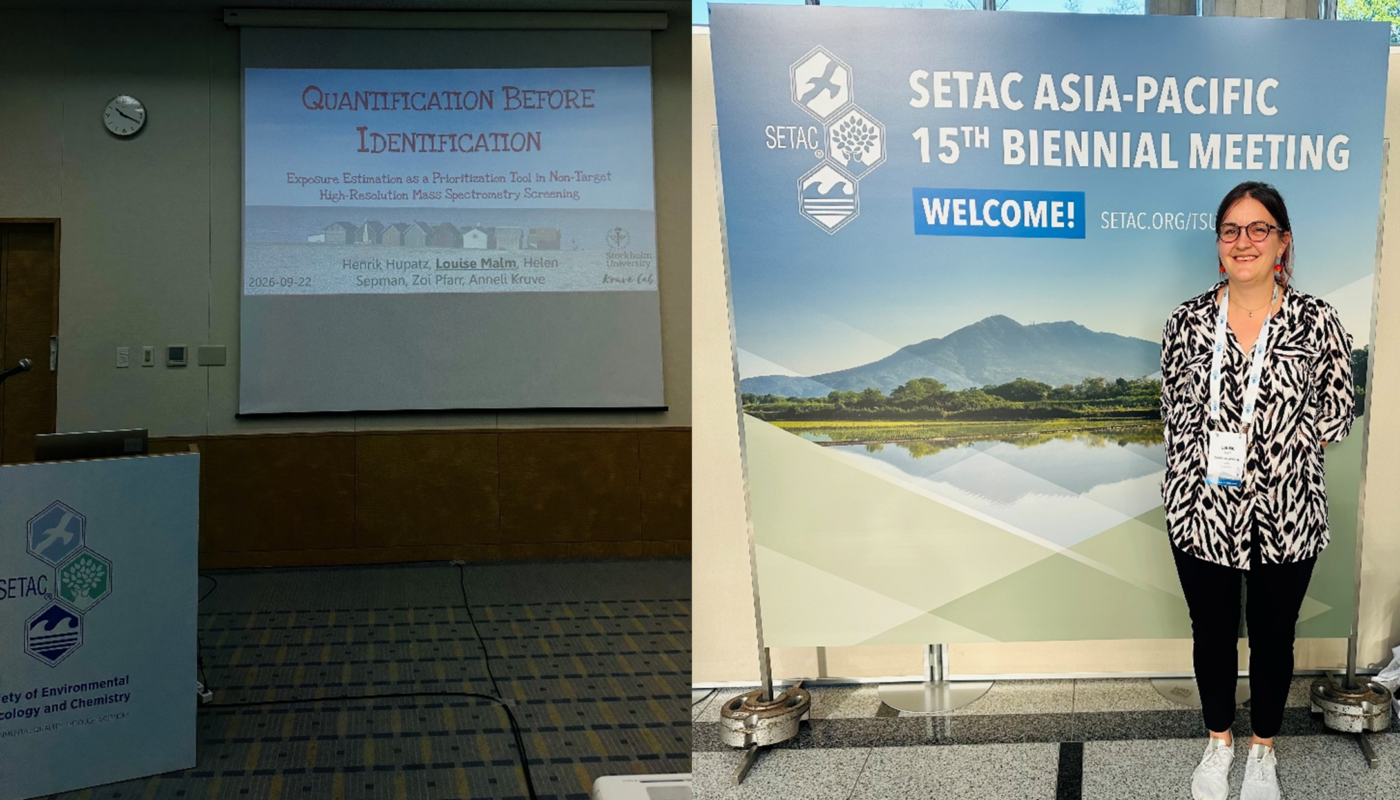
Last month, I (Louise) went to Japan to attend the SETAC Asia-Pacific 15th Biennial Meeting in Tsukuba, held September 20-23. Under the theme “Rethinking Environmental Balance for the Future”, the conference focused on ecotoxicology and environmental chemistry, with a strong emphasis on new approach methodologies. PFAS (from analysis and fluorine mass balance to remediation and risk) and plastics (including micro- and nanoplastics, tire-wear particles and biodegradable plastics) received extra attention, with many sessions, talks and posters on these topics.
Although not the main topic of the conference, non-target screening got some attention, especially in the generic environmental chemistry session on Tuesday morning. This is also where I presented our work on MS2Quant, which predicts the concentration of unidentified features directly from their MS2 spectra. The presentation was titled “Quantification Before Identification: Exposure Estimation as a Prioritization Tool in Non-Target High-Resolution Mass Spectrometry Screening”. We also introduced the ongoing updates of MS2Quant 2.0, which will add a model for negative-mode ionization, expand the training data, and be available as R and Python packages as well as a web app.
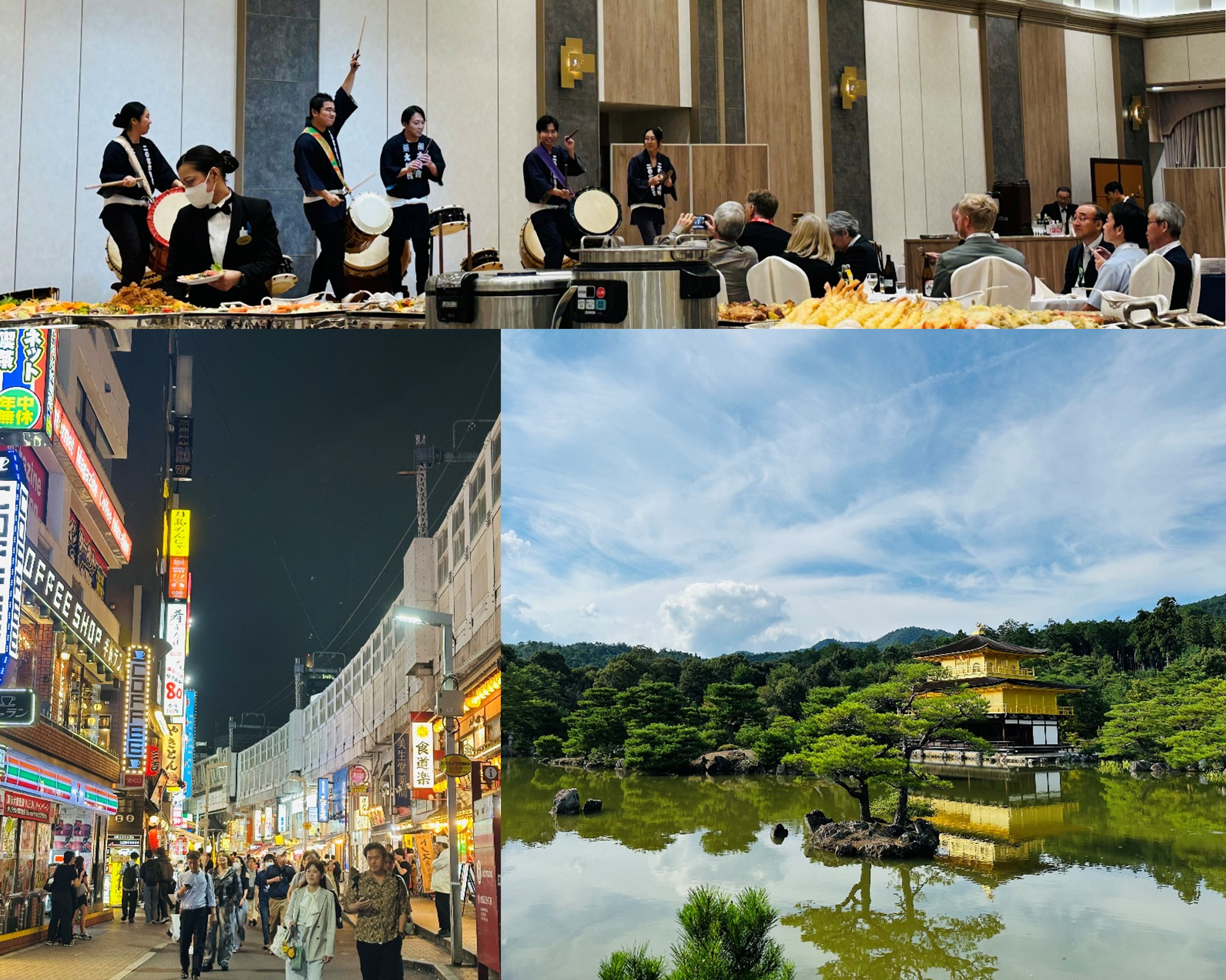
Beyond the science, the conference dinner was a fun experience, with a performance of taiko, the traditional Japanese drumming, which was great to watch.
During the first days of the conference, a typhoon approached the Pacific coast near Tokyo, bringing heavy rain and wind. Despite the weather, I really enjoyed visiting Japan and managed to squeeze in some vacation too, with time in Tokyo, a trip to Kyoto the weekend after the conference, and a quick stop in Kobe for the famous Kobe beef, which was really delicious.